
.png)
How to Build AI-Ready Policies That Actually Protect Students (Without Stifling Innovation)

Let's be honest: every time you hear "AI policy," you probably feel that familiar knot in your stomach. On one hand, you know your teachers and students need clear guidelines. On the other hand, you're terrified of creating rules so rigid they crush the very creativity and innovation your school is trying to foster.
I get it. You're caught between protecting your students and empowering your educators. Between compliance concerns and classroom creativity. Between being cautious and being courageous.
But here's what I've learned after working with dozens of school leaders navigating this exact challenge: the best AI policies aren't about choosing between safety and innovation: they're about creating a framework that makes both possible.
The S.A.F.E. Framework™: Security Meets Innovation
After years of helping schools build policies that actually work (not just look good on paper), I've developed what I call the S.A.F.E. Framework™. It's designed to help you create AI policies that are both protective and permissive: giving your community clear boundaries while leaving room to grow and explore.
S - Secure Student Data First A - Authorize Appropriate Applications F - Foster Faculty Fluency E - Evolve with Experience
Let me walk you through each element, because when you get this right, something beautiful happens: your teachers feel confident, your students stay safe, and innovation actually accelerates.

Secure Student Data First: Building Your Foundation
Before you even think about which AI tools to approve, you need rock-solid data protection protocols. This isn't just about compliance: though trust me, with federal AI regulations on the horizon, you want to be ahead of the curve here.
Start with the Non-Negotiables:
Ensure all AI tools comply with FERPA, COPPA, and CIPA requirements
Require explicit data handling agreements from any vendor
Establish clear guidelines for what student information can and cannot be shared
Create simple opt-out procedures for families who prefer their child's data not be used
But here's where most schools stop: and where you need to keep going. Security isn't just about legal compliance; it's about building trust. When your teachers know the guardrails are strong, they're more willing to experiment within them.
Make It Practical: Create a simple checklist your teachers can use before trying any new AI tool. Include questions like: "Does this tool require student login?" and "What data does it collect?" Keep it one page, make it actionable, and watch how much more confident your team becomes.
Authorize Appropriate Applications: Creating Space for Growth
This is where the magic happens: and where most schools either get too restrictive or too permissive. You want to be what I call "purposefully permissive": creating clear categories of acceptable use that give your educators room to innovate.
Define Three Zones of AI Use:
Green Zone - Encouraged Applications:
Research and information gathering
Creating visual aids and presentations
Brainstorming and idea generation
Language translation support
Accessibility accommodations
Yellow Zone - Supervised Applications:
Content creation for assignments (with transparency requirements)
Coding assistance (must demonstrate understanding)
Writing support (must cite AI assistance)
Red Zone - Restricted Applications:
Taking assessments or tests
Completing assignments without disclosure
Making disciplinary or academic decisions about students
Analyzing student behavior data without human oversight

The beauty of this approach? Your teachers aren't guessing what's okay: they have clear categories to guide their decisions. And students learn responsible AI use because the expectations are transparent from day one.
Foster Faculty Fluency: Investment Meets Implementation
Here's a truth that might surprise you: most teachers want to use AI effectively: they're just scared of doing it wrong. Your policy needs to include professional development, not as an afterthought, but as a central pillar.
Create Confidence Through Competence:
Offer monthly "AI Office Hours" where teachers can ask questions and share discoveries
Partner experienced AI users with those just starting out
Provide template language for student disclosure requirements
Share success stories and lessons learned across your team
But don't stop at training your teachers: train your students too. The most successful schools I work with have found that when students understand the "why" behind AI policies, they become partners in maintaining them rather than adversaries trying to work around them.
Student AI Literacy Essentials:
How to appropriately cite AI assistance
Understanding bias in AI-generated content
Recognizing when human judgment trumps AI suggestions
Developing critical evaluation skills for AI outputs

Evolve with Experience: Growth Guided by Grace
This might be the most important part of your policy: and the part most schools forget to include. AI technology is changing rapidly, and your policies need to change with it. But that doesn't mean starting from scratch every few months.
Build in Regular Review Cycles:
Quarterly check-ins with teachers about what's working and what isn't
Annual policy reviews that incorporate new tools and regulations
Student feedback sessions about AI use in their learning
Parent and community input on comfort levels and concerns
The goal isn't perfection from day one: it's continuous improvement guided by real experience and genuine feedback. Some of the best policy adjustments I've seen came from listening to a frustrated teacher or a confused student.
Document Your Journey: Keep track of what tools you've approved, what you've restricted, and most importantly, why. When federal regulations do arrive (and they will), you'll have a clear record of thoughtful decision-making rather than reactive rule-making.
Making It Work in Your Context
Every school culture is different, and your AI policy should reflect your unique community values and needs. But here are some universal principles that make any AI policy more effective:
Start Small and Scale Smart: Pick 2-3 teacher volunteers to pilot AI tools and policy frameworks. Let them become your champions and troubleshooters before rolling out district-wide.
Communicate with Clarity: Your policy language should be clear enough that a substitute teacher could understand and implement it. If you need a lawyer to interpret your own policy, it's too complex.
Choose Progress Over Perfection: Better to have a simple, clear policy that everyone can follow than a comprehensive one that sits on a shelf gathering dust.
Beyond Compliance: Creating Culture Change
The schools that truly succeed with AI aren't just checking compliance boxes: they're using AI policy development as an opportunity to strengthen their culture of innovation, collaboration, and continuous learning.
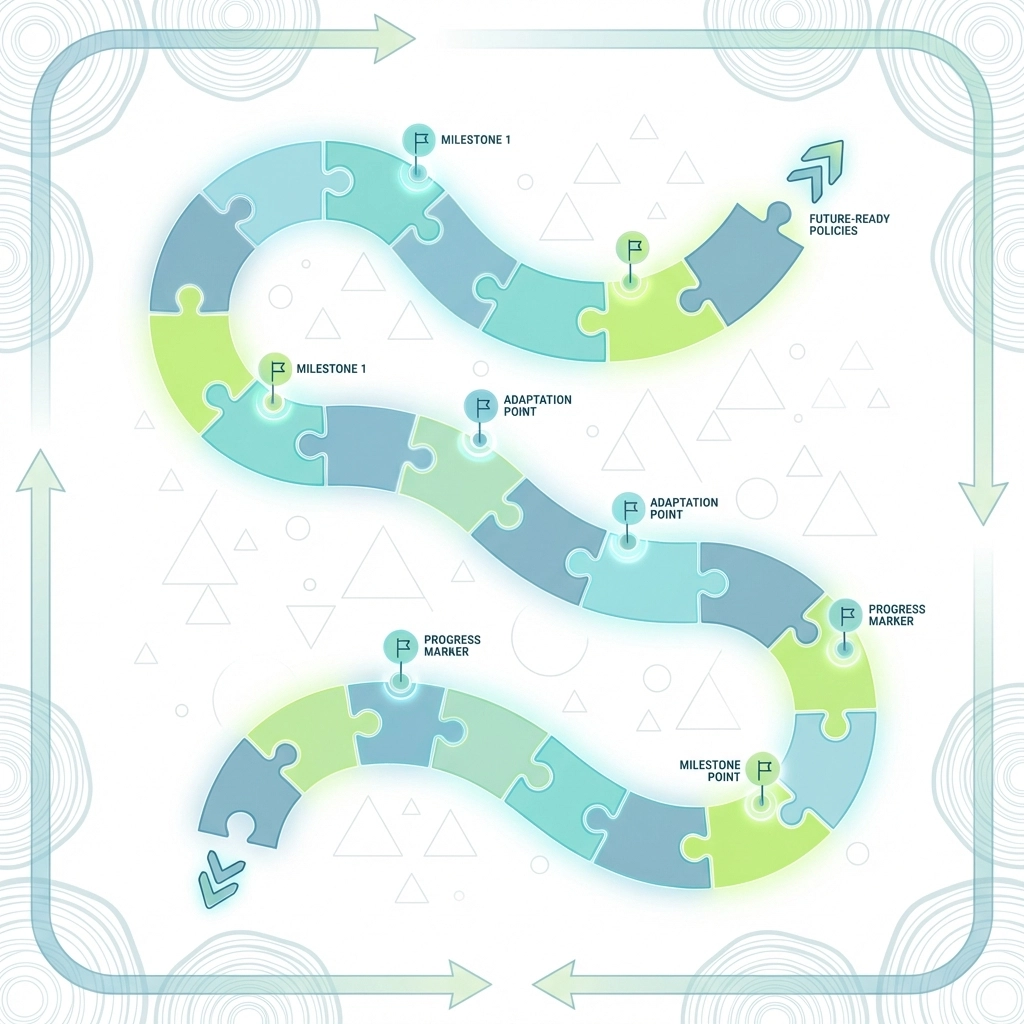
When you approach AI policy through the S.A.F.E. Framework™, something beautiful happens: your teachers stop asking "Am I allowed to try this?" and start asking "How can I use this responsibly to help my students learn better?"
That shift in mindset? That's where real innovation happens: safely, thoughtfully, and with your students' best interests at heart.
Your Next Steps: Small Moves, Big Impact
Ready to build AI policies that protect and empower? Start here:
Remember, you're not just writing policy: you're creating the conditions for your students and teachers to thrive in an AI-enhanced world. And when you do it thoughtfully, with both courage and care, everyone wins.

If you're feeling overwhelmed by the possibilities or unsure where to start, you don't have to figure this out alone. Building policies that both protect and empower takes experience, wisdom, and sometimes an outside perspective to help you see the forest through the trees.
Ready to transform your AI policy from restrictive to revolutionary? Let's build something G.R.E.A.T. together. Visit us at destined2bgrt.com and let's create a policy framework that serves your students, supports your teachers, and strengthens your school culture( because that's what true educational leadership looks like.)


Comments